
After earning a standing ovation at this year’s Sundance Film Festival, A24’s “The Invite” closed out Independent Film Festival Boston on a high Wednesday night, with director Olivia Wilde in attendance. The screenplay is adapted from the Spanish film “The People Upstairs” by Cesc Gay and reimagined by Will McCormack and Rashida Jones.
“The Invite” stars Wilde as Angela and Seth Rogen as Joe, a married couple whose relationship is consumed by constant bickering. After a draining day at a job he despises and a long bike commute home, Joe discovers that Angela has invited their upstairs neighbors over for dinner. Desperate for her to rescind the invitation, he threatens to embarrass her by bringing up the neighbors’ very audible erotic encounters upstairs.
Before their argument can escalate, the neighbors, Pina (Penélope Cruz) and Hawk (Edward Norton), arrive, setting off a night filled with awkward comedy, emotional reckonings, and increasingly blurred boundaries between strangers.
As director, Wilde gave the cast room to play, encouraging improvisation and allowing them to shape their characters in a process that often felt like a live character study. The result is a cast that feels remarkably authentic, from the smallest reactions and facial expressions to the way each character physically moves through a scene.
On the red carpet of the Festival, Wilde spoke about how that trust and freedom gave Rogen the space to move beyond his character’s comedic, curmudgeonly exterior and uncover something far more vulnerable underneath.
“I knew that Seth Rogen was one of the funniest people I’d ever met in my life, and I know he is kind of a comedy scientist and unbelievably smart and fast,” Wilde said. “I am amazed by the amount of empathy and emotional range he brings to this character. As his scene partner and his director, every day I was just so moved by his work and his depth. I mean, I knew he could do it because he’s amazing, but it was such an incredible thing to witness. I love that people are watching the movie and feeling like they’re seeing another side of Seth.”
Shot entirely on 35mm, the film carries a texture and grit that many modern productions lack. The format also forced Wilde to approach every scene with precision and intention. Unlike most productions, the film was shot sequentially, a choice that arguably strengthened the performances. As the audience gradually uncovers who these characters are, the cast was discovering them in real time as well, making each emotional revelation feel organic rather than manufactured.
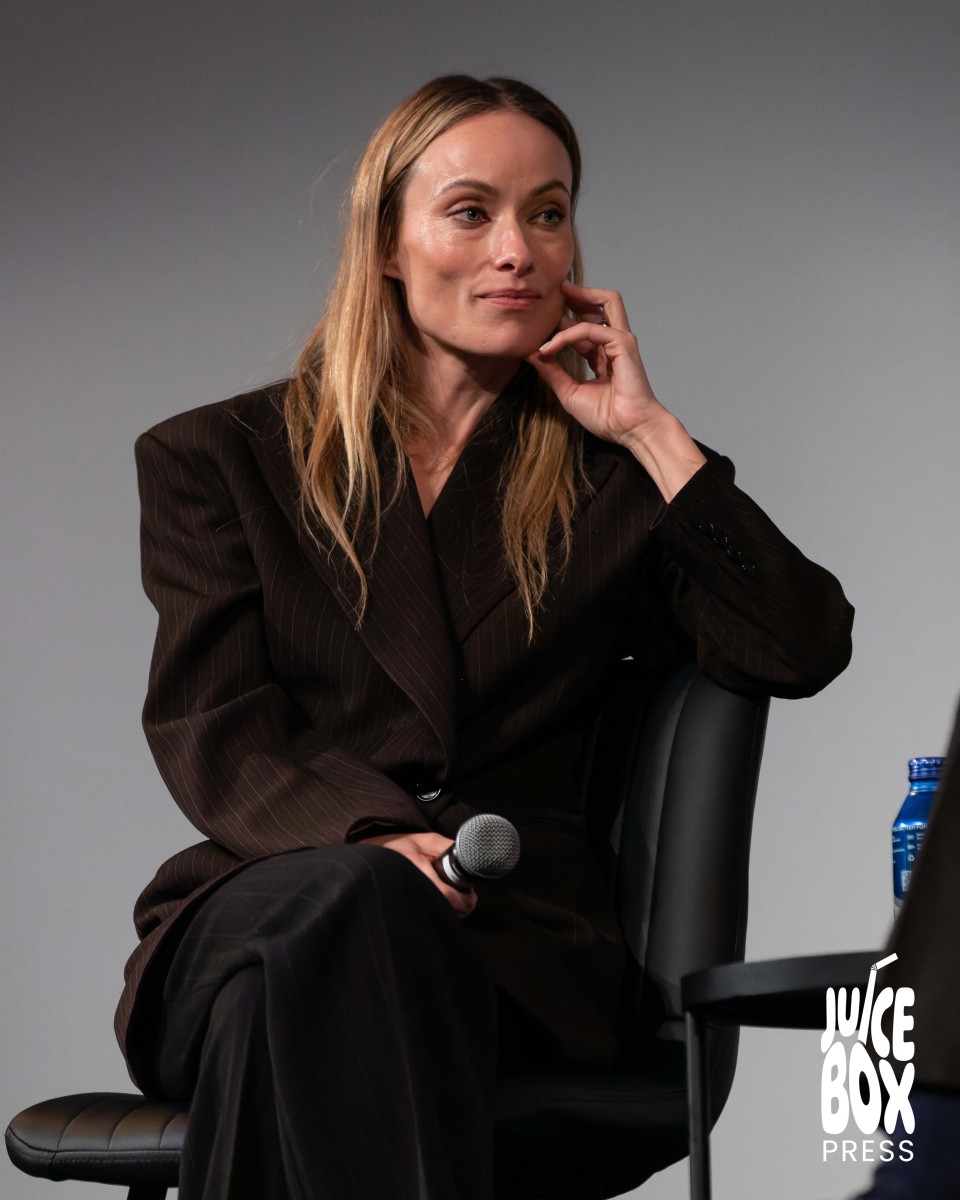
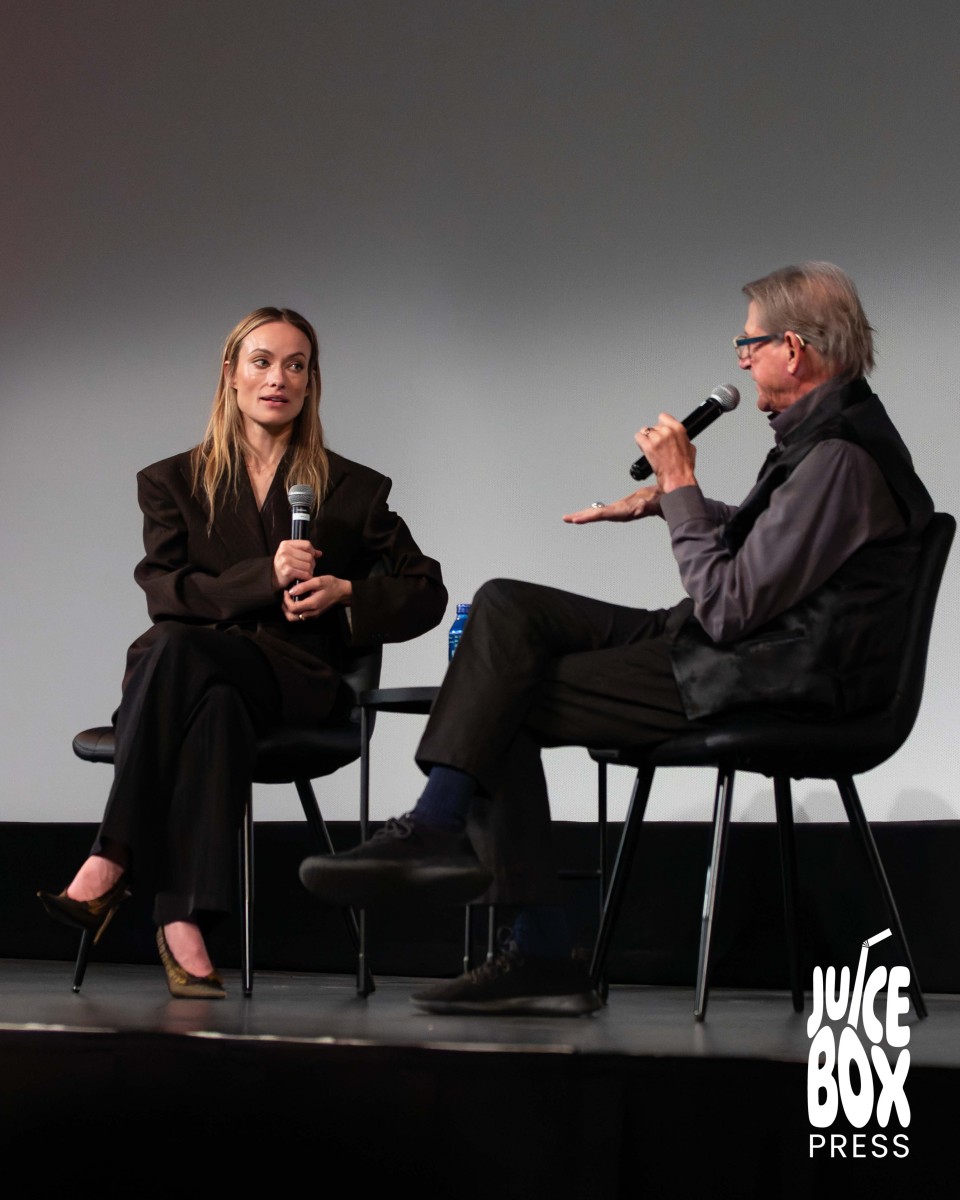
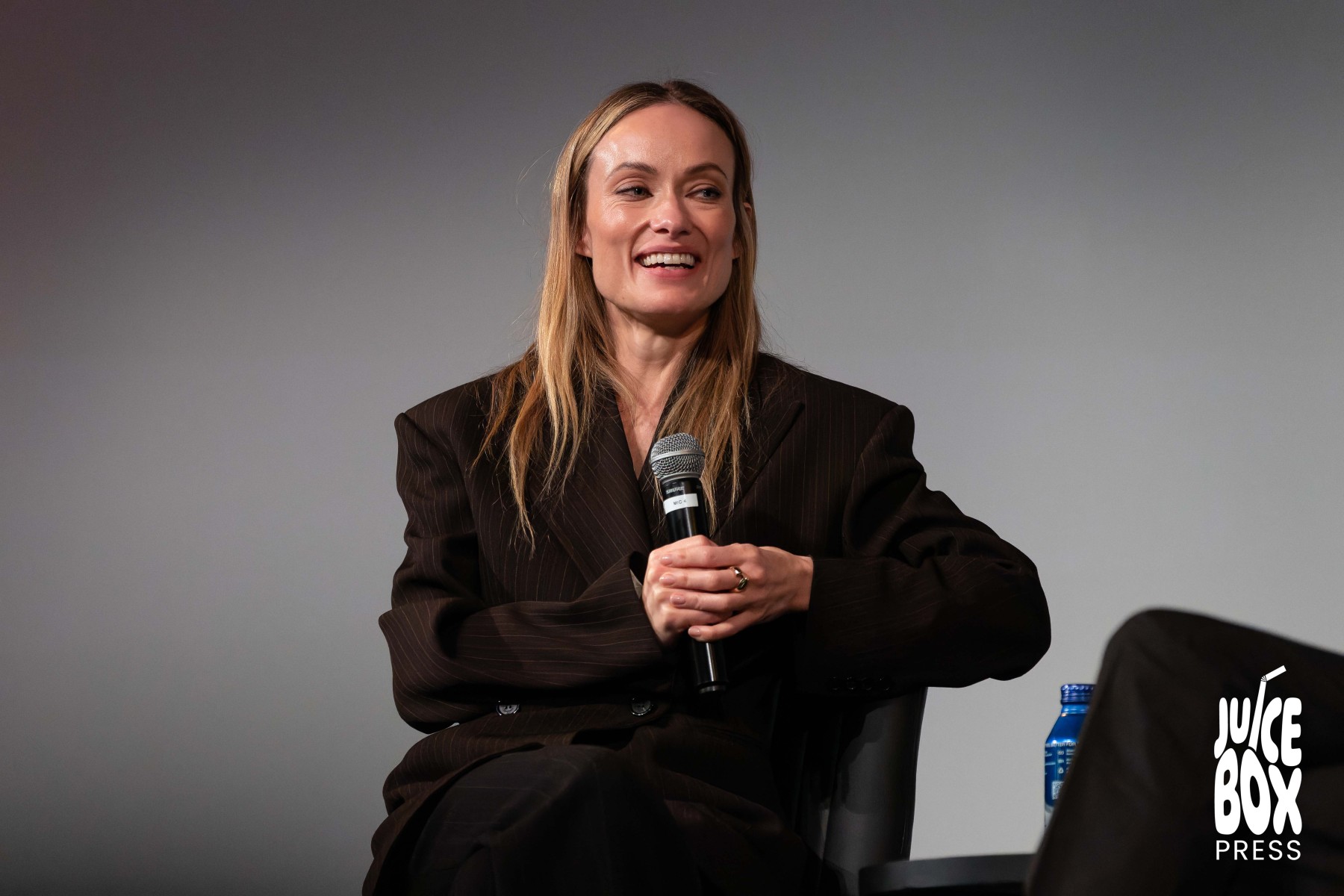
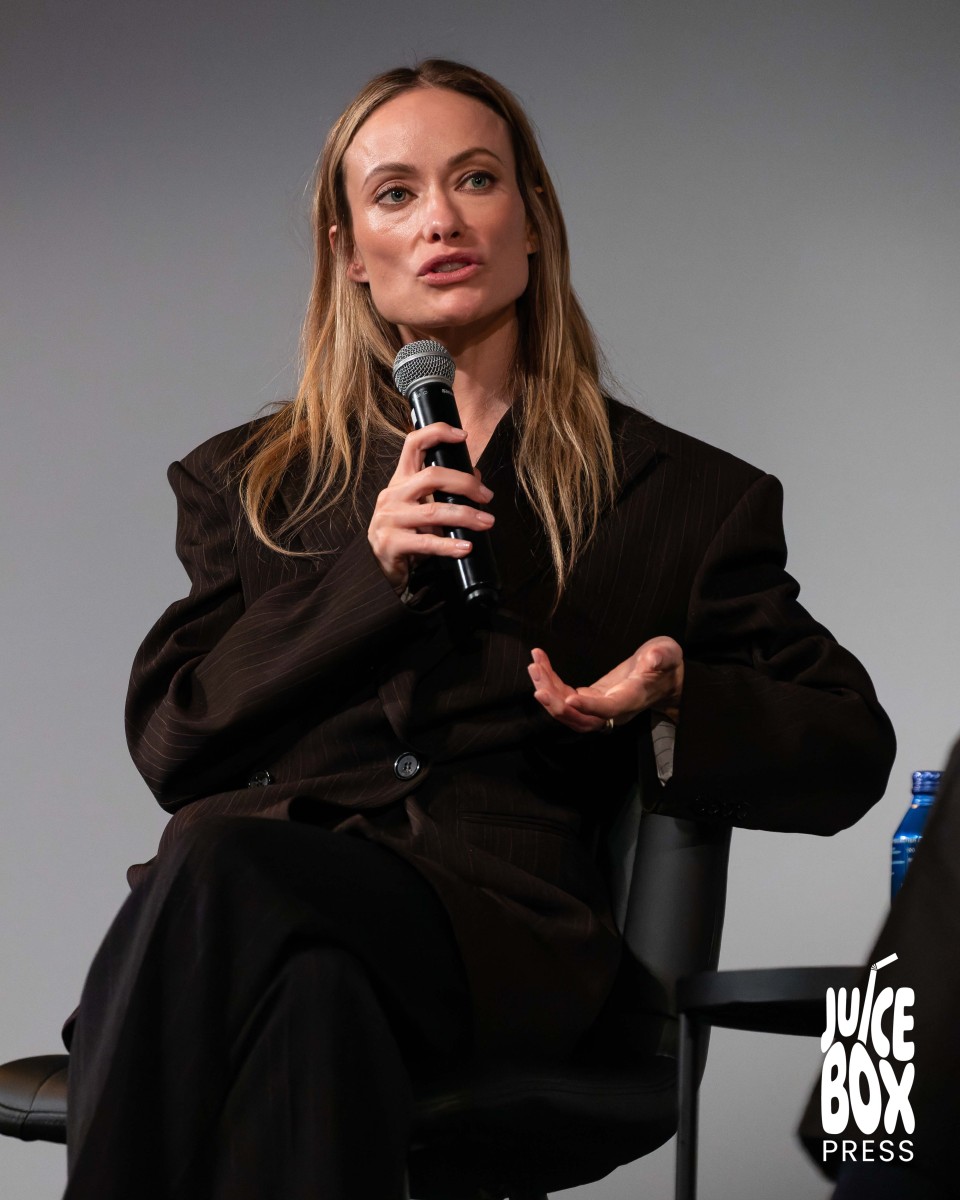
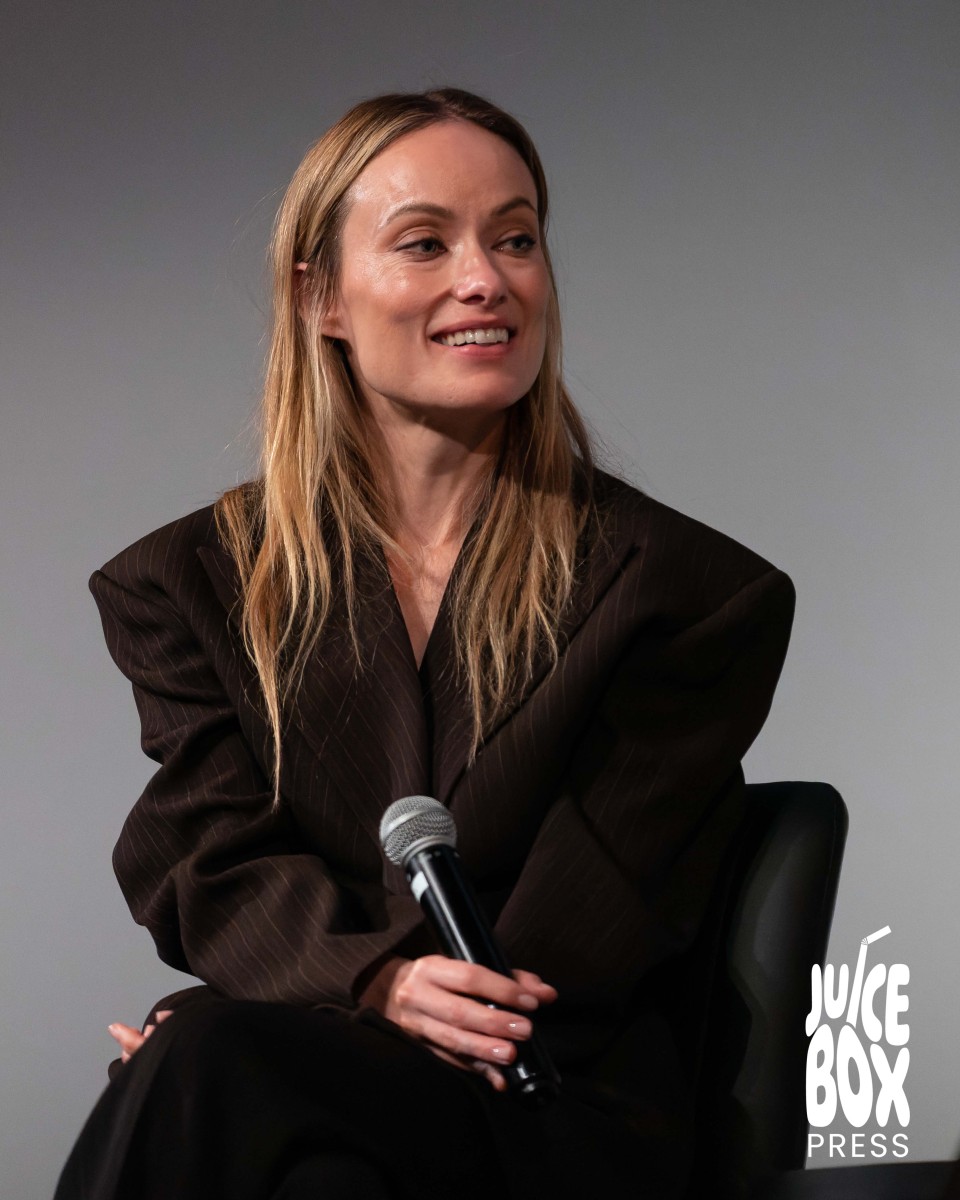
That intentionality is equally apparent in Wilde’s visual composition. Many shots feel like carefully constructed vignettes, using mirrors, door frames, and leading lines to isolate whichever character is emotionally at the center of a scene. One particularly subtle but striking example comes when Angela and Hawk stand alone in the bedroom, silhouetted against the blue paint swatches Angela cannot decide on. During the film’s post-screening Q&A with couples counselor Terry Real, Wilde explained the significance of both the blue walls and Angela’s matching wardrobe.
“It’s very intentional that her shirt is the same color as the walls, because she’s literally disappeared into this home and kind of given up her entire personality for, well, for him, really, for this life they built together,” Wilde explained, describing Angela’s gradual loss of self within her marriage to Joe.
The sound design is another standout element, led by composer Devonté Hynes. The score is almost entirely orchestral, aside from the film’s recurring joke about Pina’s devotion to Sade. It’s an effective creative choice because the music never distracts from the film itself. Instead, it becomes an emotional extension of the characters, amplifying tension in ways that often feel subconscious. Early in the film, the score swells loudly enough to compete with Angela and Joe’s argumentative dialogue, almost functioning as another voice within the conflict.
The film’s ending ultimately solidifies why it earned such a strong response at Sundance. For much of its runtime, the scenarios are hilariously funny in their relatability, but the story takes a sharp and devastating turn after a seduction goes horribly wrong. In the aftermath, Angela and Joe are finally forced into the difficult conversations they’ve spent the entire film avoiding.
Wilde could have easily wrapped the story in a neat Hollywood ending, but instead she chooses uncertainty, a decision that feels truer to the film’s emotional honesty. That ambiguity becomes deafening in the final moments. Sitting together at a piano Joe has long avoided because of unresolved trauma, their hands move across the keys in sync, suggesting a resolution. Yet Wilde leaves the audience questioning whether the couple will genuinely confront their unhappiness or simply settle back into familiar misery.
Wilde’s debut, “Booksmart,” and her sophomore feature, “Don’t Worry Darling,” were both impressive in their own ways, but “The Invite” feels like her most fully realized work yet. Not only does Wilde deliver a career-defining performance, but as a filmmaker, she tells a story that’s emotionally honest, visually intentional, and human.
Featured Photo Courtesy of A24

Amelia Cordischi, Founder and Editor-in-Chief of Juice Box Press, is an accomplished digital marketing professional with over a decade of experience in media and communications. Her work has been featured in notable publications, including The Boston Globe. A communications graduate of Simmons University in Boston, Amelia served as manager of Simmons College Radio (“The Shark”), where she also launched and co-hosted her radio show, The Find.
In addition to her editorial work, Amelia is an established freelance photographer, with bylines in Blended Magazine and CelebMix, capturing artists and cultural moments across the music and media landscape. Her career began at WCVB-TV’s Chronicle, the ABC affiliate in Boston, where she gained firsthand experience in broadcast journalism and storytelling.
When she’s not taking photos from the photo pit, interviewing emerging artists, or crafting the next Juice Box Press feature, Amelia can be found thrifting and exploring the world of sustainable fashion.