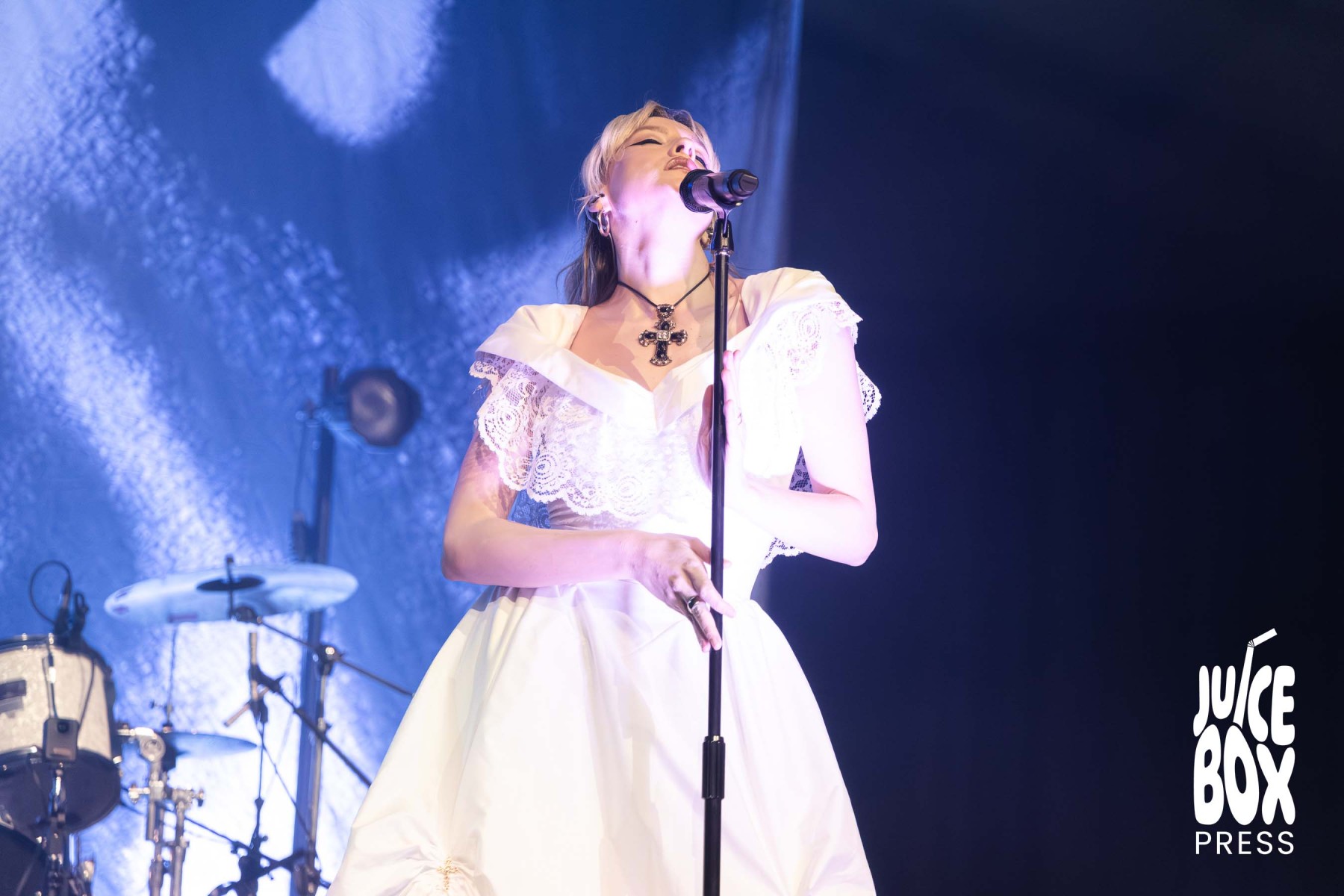
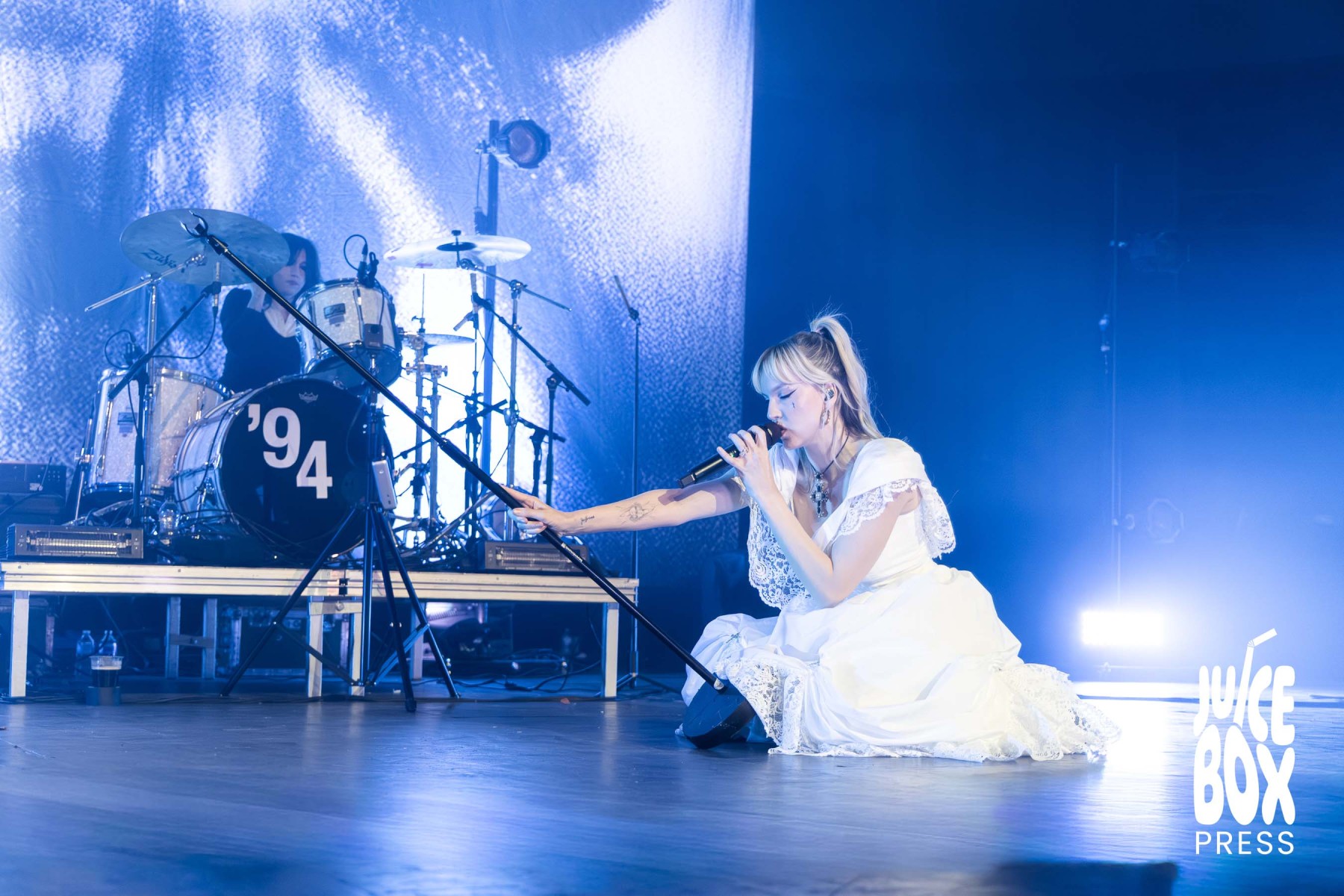
Sunday (1994) continues to grow their devoted fanbase through immersive, quietly transportive live shows. Their “appearing live in london” tour showcases Devotion, the six-track sophomore EP that expands on the story first set in motion by their 2024 self-titled debut. On November 21, the crowd at EartH Theatre in Hackney slipped quickly, and willingly, into the vivid, intimate storytelling of the transatlantic trio, with Hot Stamp and CQ Wrestling opening.
The first notes of the night belonged to Hot Stamp, who walked onstage with the look of a band that had seen enough small, dimly lit rooms to know exactly how to handle a larger one. They opened with sharp, bright guitar lines that snapped like wires under tension, matched by vocals that carried a quiet bruised sincerity. Their songs felt like fragments from a diary someone tried to throw away but never quite managed to burn. Each chorus glimmered with just enough warmth to make the edges sting a little.
Though their set was brief, they shifted the room from idle chatter to real attention, leaving behind a faint emotional static that clung to the walls.
CQ Wrestling stepped into that static and bent it into stranger shapes. Their sound arrived in jolts, basslines knocking the floorboards loose while the guitar spiraled outward like a thought trying to outrun itself. There was an unpolished charm to how they moved through their set, purposeful yet slightly disjointed, the way a dream sometimes rearranges familiar objects into something unexpected. Their vocals wavered between speaking and singing, lending everything a feeling of uncertainty, as if the ground might tilt at any moment. People edged closer, drawn in not by spectacle but by curiosity. CQ Wrestling left the stage with the sense that they had gently tilted the room off its axis.
Then Sunday (1994) emerged in the softened light, and the mood changed again, settling into something quiet and strangely intimate. They began with “Our Troubles,” Paige Turner’s voice gliding through the room with a calm that felt earned rather than affected. There was a heaviness beneath the softness, a kind of fatigue that made the lyrics land with unusual clarity. When they moved into “Softly,” the crowd sank deeper into stillness, held by the slow, patient cadence of the song.
“Doomsday” brought a darker undertow that threaded through the venue like a shared memory resurfacing. “Devotion” followed with a warmth that never quite tipped into comfort, balanced by Lee Newell’s careful, glimmering guitar lines. Their unnamed drummer kept everything steady, shaping the mood with a pulse that rarely shifted yet carried quiet force.
In the middle stretch of the set, the storytelling in their music became more vivid. “TV Car Chase” flickered across the venue with the feeling of watching something unfold through half closed blinds. Blonde brought a washed out tenderness. Stained Glass Window refracted the atmosphere into something more delicate. “Silver Ford” moved like a journey taken alone on a long road at night.
“The Loneliness of the Long Flight Home” held the room in a hush, its title more than just a name, its melody touching the edges of the crowd with a quiet ache. Rain, Mascara, Still Blue, and Picking Flowers carried that thread forward, each one a small vignette, unhurried and unmistakably human.
The encore arrived gently with Blossom, a song that felt like a final light left on in an empty house. Tired Boy closed the night with a sigh rather than a flourish, leaving the room suspended in a moment that no one seemed eager to break.
When Sunday (1994) left the stage, the silence that followed was not awkward. It was the kind that settles after a story told with enough truth that no one wants to speak over it. The crowd eventually drifted out into the cold, carrying that quiet weight with them, the way you carry a memory that refuses to leave.
Find tickets to escape into a Sunday (1994) show here.